National Kidney Month is in March

During National Kidney Month, we recognize how kidneys play an important role in keeping our bodies healthy. In fact, all the blood in our body takes a trip through these bean-shaped organs about 40 times per day!

Below, we’ll dive into what your kidneys do and how to keep them working in tip-top shape. We’ll also touch on chronic kidney disease symptoms and living kidney donors.

What do your kidneys do?

You have two kidneys on either side of your spine, between your ribs and your belly button. They are about the size of an adult fist, and they perform many complex functions to keep the rest of your body feeling well.

Most of us know that kidneys remove waste from our body. But did you know they also make hormones that regulate your blood pressure and red blood cells?

Yup, you can thank your kidneys for:

  • Removing excess fluid and waste from your body
  • Filtering toxins from your blood
  • Regulating the production of your red blood cells
  • Producing essential vitamins
  • Releasing blood pressure-regulating hormones

Over a million tiny filters, called nephrons, make up each of your kidneys. Nephrons work together to filter your blood, remove waste and return necessary nutrients back to your blood. The waste and extra water is what makes up urine.

How to keep your kidneys healthy

Now that we’ve talked about the importance of this organ duo, it’s clear why keeping them healthy is a priority.

Here are some things you can do for your kidney health:

  • Drink plenty of fluids, especially water
  • Eat nutritious foods, like fruits and vegetables
  • Avoid eating too much salt or fat
  • Maintain a healthy blood pressure
  • Stop smoking
  • Drink alcohol in moderation
  • Lose excess weight
  • Stay active
  • If you’re a diabetic, keep your blood sugar levels under control

Chronic kidney disease

About 1 in 7 adult Americans live with chronic kidney disease. This means their kidneys are damaged and are not functioning properly. Chronic kidney disease can be caused by diabetes, high blood pressure or an immune system disease such as lupus.

The word “chronic” is used because the disease gets worse over time. If you’re at risk for kidney disease, talk to your doctor about getting tested. The sooner you’re diagnosed, the sooner you can begin treatment. Unfortunately, there is no way to reverse chronic kidney disease, but there are ways to slow the progression, such as lifestyle and diet changes.

Learn about living kidney donors during National Kidney Month

Individuals with chronic kidney disease eventually need dialysis or a kidney transplant. In the U.S, 100,000 people are awaiting a kidney transplant. Healthy people with normal kidney function can become living kidney donors. Our bodies can function normally with just one kidney.

A living kidney donor could donate their organ to someone who needs a functional kidney. This could be a blood relative, spouse, or friend. Kidneys can also be donated to someone anonymously (non-directed donation).

In this National Kidney Month article, we hope you have learned more about your kidneys and how to keep them healthy.

Elder Fraud: How to Protect Yourself

The FBI estimates that American seniors lose $3 billion a year to elder fraud. Unfortunately, scammers often target seniors because they can be trusting and may have built up a healthy savings account over their lifetime.

Being aware of scams targeting seniors can help you protect yourself. It’s important to recognize the common tactics used in elder fraud so you know if it is happening to you or a loved one before it is too late.

What is Elder Fraud?

Elder fraud is any fraud that targets older adults. Scammers may target seniors by phone call, text message, email, or mail.

For victims, the financial impact of elder fraud can be devastating. The average victim of elder fraud loses around $34,000. Not only does it take a toll financially, but being a victim of fraud can hurt your mental and emotional health too.

Common Scams that Target Seniors

During the pandemic, there has been an increase in scams targeting seniors. As older adults spent more time online to connect with friends and family, fraudsters targeted seniors through emails and other online avenues.

Here are some of the top scams targeting seniors.

  • Romance Fraud
    The criminal targets widows and single elders, earning their trust. Eventually, the scammer asks for small sums of money and then larger.

  • Fake Grandchild
    Scammers will call a senior and say something like, “Hi Grandma, it’s your favorite grandchild.” Then they ask for money for rent, a car repair, or similar.
  • Charity Scams
    Using a fake charity name, criminals ask seniors to donate to a charity that supports a good cause. Online fund-raising pages can also be fraudulent.
  • Government Impersonation
    Criminals claim they work for the government and tell elders they’ll be prosecuted or fined if they do not comply with their request.
  • Tech Support Schemes
    A pop-up appears on the computer screen and says to call a number to resolve a computer issue. When the senior calls, the scammer poses as a tech support representative. They pretend to “fix” the computer remotely while gaining access to sensitive information and asking for payment in return.
  • Sweepstakes and Lottery Scams
    Criminals call or email claiming that the designated senior has won a prize. They say that an initial payment needs to be made by the individual to gain access to the prize.
  • Phishing Emails
    Phishing emails may look like they’re from a company you know or trust. Scammers disguise themselves to gain access to your passwords, bank account numbers, and other sensitive information.
  • Widow Schemes
    Scammers will call a surviving spouse after losing a husband or wife. They claim to work for a financial institution associated with the deceased spouse and claim they need money to pay for fees, overdue bills, etc.

How to Avoid Being a Victim of Elder Fraud

Scammers are always creating new tactics and avenues to target seniors. Here are steps you can take to stay on guard and protect yourself.

Hang Up and Call Back

Scammers often disguise themselves as a business or organization you’re familiar with. They may even disguise their number, so it looks like you’re receiving a call from a local area code. If you receive a call from a person claiming to be from your bank, the Social Security Office, or a particular charity, and they ask for personal information, hang up.

Then, find your most recent bank statement or the official phone number online and call back. This ensures that you speak with the legitimate organization or business.

Be Careful of Links and Attachments

Even if you know and trust the individual who sends you a link via email, social media, or text message, be cautious before clicking on it. You may want to call your friend or family member to verify that they sent you the link. Clicking on suspicious links can lead to viruses or spyware being downloaded to your device–something you want to avoid.

Be Aware of Acquaintances

Sadly, scammers aren’t always strangers. Be cautious when lending money to friends or family members with addiction issues, financial difficulties, or a history of criminal activity.

Reporting Elder Fraud and Scams

If you think you may be a victim of elder fraud, reach out to someone you trust. Don’t feel embarrassed. It’s important to address the issue before it becomes worse.

You can also report the scam to the local police, file an internet crime complaint, or call your local FBI office. Reporting the crime is the first step in getting the scam shut down so other seniors won’t be defrauded.

Dental Care Helps Seniors and Their Family Caregivers

At WelbeHealth, health care and dental care are integrated and coordinated. Once a medical provider does an initial assessment of a senior entering our program, the senior sees our dental team for preventive dental care and any necessary dental treatments.

Lisa Gildea, an RDHAP (Registered Dental Hygienist in Alternative Practice) at WelbeHealth, has made a difference in the lives of many seniors including Florentino, age 92, and his adult daughter and caregiver, Patricia.

A Caregiver’s Experience

Patricia has been delighted with the services WelbeHealth provides for her father, Florentino, especially the dental services and the in-home support they receive from Home Instead Agency—all provided through the WelbeHealth program. Patricia says, “The regular assistance with quality care from WelbeHealth and the Home Instead Caregivers allows me to continue working my full-time career, while still taking care of my father and my home. I cannot emphasize enough how much peace of mind this generates. If I can pull it off, anyone can. Just don’t give up.”

Patricia says, “Lisa Gildea has been extraordinary with my father. I have never experienced dental customer service like Lisa provides through the PACE program. Lisa spends significant time with me on the phone both before and after each of my father’s dental appointments. She assesses his situation, provides me with the supplies we need for his dental care, and answers all my questions.”

For Patricia, whose father still has a beautiful full set of teeth, it is important to help maintain his teeth now that he can’t do it for himself. Patricia says, “My father spent a lifetime taking care of his teeth, and now it is my turn to help keep them in good condition. As a caregiver, it is important to stay optimistic and tenacious. We have to persevere in finding ways to advocate and take care of ourselves and the elderly in our family and community.”

Patricia continues, “WelbeHealth sets up all his appointments, provides Lisa for his dental care, and picks him up for his appointments. They don’t give up on their geriatric patients. My father really responds to Lisa. She is creative with how she cleans his teeth, is kind, nurturing, and he picks up on that.”

Lisa Gildea and Florentino in a WelbeHealth center

Lisa Gildea and Florentino in a WelbeHeath center

Medical and Dental, all Under One Roof

Lisa Gildea talks about WelbeHealth’s integrated medical and dental services to seniors at community presentations in the Stockton and Modesto areas of California.

The presentations cover the services that WelbeHealth provides to qualifying seniors, with a special focus on its dental services. In each presentation, Gildea provides supplies for tooth brushing and flossing, and dental education such as diet, how to brush teeth and how to floss.

Table with supplies and educational materials at outreach event

Supplies and education for seniors at an outreach event

Gildea explains to senior groups that a WelbeHealth dentist typically handles the first dental visit. The dentist takes a set of x-rays, does an exam, and then explains the cleaning needs and treatment plan to the dental hygienist.

Gildea says, “I do an assessment, a cleaning, fluoride treatment, and put each senior on a routine maintenance and preventative care plan.” She adds, “At WelbeHealth, our goal is to keep seniors as healthy as possible while living in their own homes and communities.”

Gildea says there are advantages to having medical and dental all under one roof. “I can quickly talk to other providers if the senior needs a prescription, for example. Everybody understands what the senior needs—that’s part of the all-inclusive nature of the service.”

WelbeHealth transportation brings seniors to the day center for their appointments. Gildea says, “Many seniors don’t have their own transportation, so it is all pre-arranged according to their needs. If a senior comes in for a cleaning, they can also go to other appointments at the center that day, such as a routine medical check-up, lab work, or physical therapy. This minimizes the number of trips and separate appointments needed.”

Lisa Gildea at community outreach event

Lisa Gildea educates seniors at community outreach events.

The Importance of a Healthy Smile

A healthy smile can boost seniors’ confidence, keep them eating nutritious foods, and promote good health. Gildea says, “Many seniors have worked an entire lifetime and haven’t had access to dental care. I love providing seniors access to dental care to bridge that gap. At WelbeHealth, I have the flexibility to do what is best for the individual.”

Gildea continues, “Helping a senior go from poor oral health to good oral health is very rewarding. And it makes my job feel so much bigger than just doing dental cleanings. I teach seniors about the importance of good daily dental habits and routine dental care. The results are incredible and valuable because our general health is connected to our oral health.”

Gildea says she also enjoys helping seniors go from feeling nervous or fearful about their dental hygiene visit to being comfortable and excited about their visits.

COVID-19 Considerations

With COVID-19 still active in our communities, seniors are often concerned about safety. Gildea says, “WelbeHealth is very cautious about COVID-19, and has good safety measures in place. The pandemic also highlights a growing need to see seniors at home. When needed, I can visit seniors safely where they live.” Gildea takes a portable dental unit to home appointments with all the comforts of the dental office, and she has mobile X-ray equipment.

Gildea says, “Some seniors are in memory care and cannot get to the dental suite, so going to them can be the best option for their dental care.”

Comprehensive Care

WelbeHealth is unique, as it serves as both the payor and the provider. There are no outside restrictions on services such as dentures, extractions, crowns, or fillings. The dental hygienist can do deep cleanings and create maintenance schedules that fit the individual’s needs.  The dentist and dental hygienist collaborate and share information to create a treatment plan that best accommodates the patient.

Seniors enjoy the benefits of personalized and coordinated medical and dental care and have access to activities and socialization along with meals at the center. Depending on the need, Gildea will see between four and six seniors in a typical day. Gildea says, “WelbeHealth allows me to take my time with each senior, and to see them as often as I feel is necessary. This setting gives me the freedom to make decisions based on what is best for the individual.”

Yoga for Seniors

What comes to mind when you hear the word yoga? If it’s a young person twisted into a pretzel-like position, you’re not alone. Many people don’t realize that yoga for seniors is incredibly flexible – even if you’re not! Yoga can be adapted to meet the abilities of all age groups, from children to older adults.

Yoga is ideal for seniors looking for a gentle way to care for their mind and body. Here’s how to start a regular yoga practice. (No pretzel formation is necessary!)

The Benefits of Yoga for Seniors

The mindful movement of yoga can be beneficial for everyone, including older adults. Regular practice increases muscle tone, balance, strength, and boosts mood.

Shelley Newhouse is the Director of Talent Attraction & Enablement at WelbeHealth. She is also a 500-hour certified yoga instructor with Yoga Alliance. She says yoga for seniors can help relieve stress and tension in the body.

“Yoga can make us more comfortable and at ease. When you start to integrate the breath and the mindfulness of the practice, it can be really calming,” Newhouse explains. “Yoga allows people to be more present. They aren’t as caught up in what happened yesterday or what might happen tomorrow. Yoga can help people enjoy what is truly meaningful.”

By lengthening and stretching muscles, yoga can provide some relief for tight muscles and joints. If you have arthritis, you may find regular yoga helpful when paired with your other treatments.

Best Types of Yoga for Seniors

Chair Yoga for Seniors

If your mobility is limited, you can still get the benefits of yoga while sitting in a chair. In most cases, chair yoga is gentle and good for seniors who may be new to the activity.

During chair yoga for seniors, poses are done while seated comfortably in a chair. Or, you may use the chair for support during standing poses. You can choose how much you use the chair depending on your body and mobility. With time and regular practice, you may find that you need the chair than when you began!

Restorative Yoga for Seniors

While traditional yoga focuses on stretching and strengthening, restorative yoga focuses on relaxation. During restorative yoga for seniors, poses are gentle and often held longer. You’ll focus on your breath and quiet your mind.

Many restorative yoga poses are done lying on the ground. These poses are supportive to the nervous system and have a calming effect on the mind.

How to Get Started

Before you begin your yoga practice, there are a few things you’ll want to do to prepare. Take these steps to choose the yoga practice that is right for you.

Talk to Your Healthcare Provider

Speaking with your healthcare provider is the first step and one you won’t want to skip. Let your doctor know that you’d like to try yoga, and make sure they don’t have any concerns.

Your physician may tell you to avoid certain poses or suggest you start with chair yoga. This conversation will help you stay safe, prevent injury, and know your limits.

Decide on Virtual or In-Person

In a post-pandemic world, yoga for seniors is more accessible than ever thanks to the internet. Do a quick search on YouTube to find many yoga videos. You’ll want to decide if you’re going to stream your yoga practice or find an in-person class.

Newhouse says there are advantages and drawbacks to virtual classes. “Virtual yoga classes are great because you can do them anywhere,” she says. “But people need to be mindful when they are doing a virtual class. They have to pay close attention to how their body feels because an instructor isn’t there to correct their alignment.”

Many beginner yogis may benefit from an in-person class where they can ask questions and get hands-on help from the instructor. Plus, being in a class with other seniors creates a sense of community. Check your local YMCA, recreation center, or senior center to find an in-person yoga class for older adults

Set the Mood

Whether you’re practicing at home or in a class, there are a few things you can do to optimize your yoga practice.

  • Choose a time of day – Pick whether you want to practice yoga in the morning or the evening. Make sure it is a time that you can stay consistent with.
  • Eliminate distractions – For some people, this may be silencing their phones or turning off the television. For others, it may mean decluttering their space.

“If your mind tends to wander, creating a distraction-free space can help you stay focused,” says Newhouse.

  • Wear comfy clothes – You don’t have to buy special clothes for yoga. Just wear something comfortable that you can move in.


Listen to Your Body

Like any activity, don’t push your body to its limit. If your body tells you to stop a certain movement, listen.

“You don’t need to go to the fullest extreme,” Newhouse advises. “If a movement creates pain or discomfort in your body, then definitely back off.”

Yoga Poses to Try

If you want to try yoga on your own, Newhouse recommends these poses.


Seated Mountain Pose

Benefits: Relaxes shoulders and promotes awareness in the body

Sit tall in your chair with your back straight and your hands on your knees. Gently soften your gaze, let your shoulders relax away from your ears, and focus on the sensation of your breathing.


Seated Cat/Cow

Benefits: Stretches chest muscles and releases tension in the neck

From your Seated Mountain Pose, inhale and arch your spine, moving your shoulders down your back. Exhale and round your spine, bringing your shoulders away from each other and your chin to your chest. Repeat 5-6 times.


Seated Side Bend

Benefits: Promotes balance and stretches the side of the body

From your Seated Mountain Pose, reach your right arm above your head and gently lean your upper body to the left. You’ll feel a lengthening sensation along the right side of your body. Hold for 3-4 breaths. Return to Seated Mountain Pose and repeat on the left side.


Standing Mountain Post

Benefits: Teaches the body alignment and awareness

Stand tall with your feet hips distance apart. Roll your shoulders back and bring your arms by your sides with your palms facing toward your body. Fix your gaze softly or close your eyes. Hold for 5-6 breaths.


Chair Pose

Benefits: Builds heat in the body and strengthens legs

From Standing Mountain Pose, sit your hips back like you’re about to sit into a chair. Shift most of your weight into your heels rather than your toes. Tuck your pelvic bone under to engage your core. Lift your arms over your head while pulling your shoulders away from your ears. Hold for 3-4 breaths.

Final Thoughts

Whether you practice once a week or every day, the benefit of yoga for seniors is the same. Many studies have shown that older adults can increase their strength, flexibility, and balance through a regular yoga practice. Speak with your healthcare provider to see if yoga is a good activity for you!

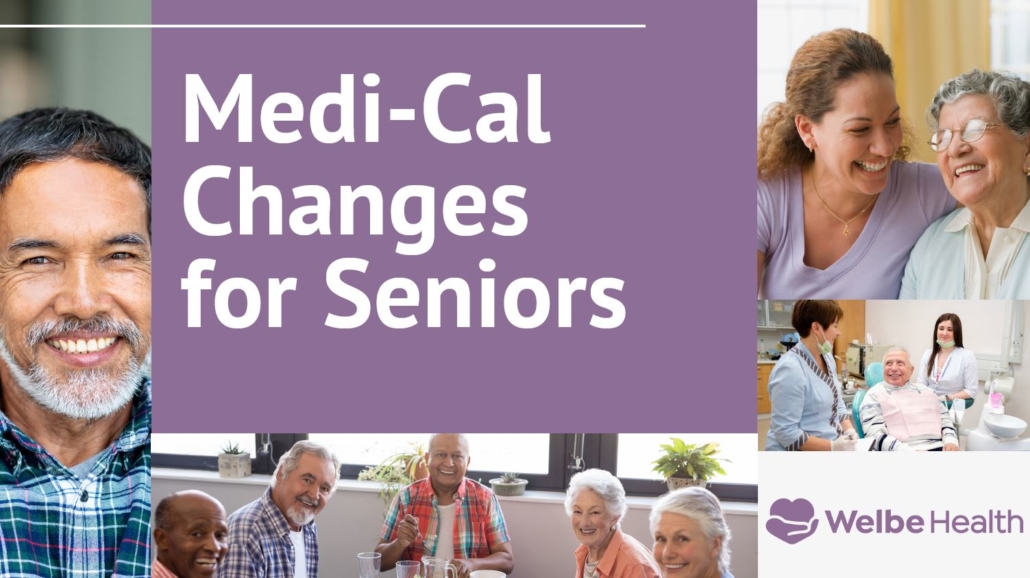
Medi-Cal Changes for California Seniors

New and expanded Medi-Cal eligiblity criteria in 2022 will allow more people to access Medi-Cal coverage. Medi-Cal changes for California seniors offer many a new chance to qualify for Medi-Cal. Read on to learn more about these changes, which for some seniors could include becoming eligible for WelbeHealth or other PACE programs in your area.

For more detailed information, see the resources listed at the bottom of the article.

  • Expanded Coverage for Undocumented Seniors
    Beginning in May 2022, Medi-Cal benefits will be provided to all individuals over the age of 50 who meet financial eligibility requirements, regardless of immigration status. This includes primary, specialty, behavioral health, long-term care, and much more. Those not currently enrolled in restricted scope Medi-Cal will need to apply to find out if they meet eligibility requirements.
  • Increased Asset Limits
    In July of 2022, the asset limit will increase for many Medi-Cal programs from $2,000 to $130,000 for individuals (plus $65,000 for each additional family member). Once this change is in effect, DHCS will send letters to those who were denied Medi-Cal or terminated coverage for being over the asset limit during the 90 days before the effective date of the change.

How this may affect you: If you were previously denied Medi-Cal enrollment due to immigration status or assets, you may want to consider re-applying.


Changes to Medi-Cal Managed Care in 2022 and 2023

The California Advancing and Innovating Medi-Cal (CalAIM) initiative standardizes managed care enrollment and benefits, addresses social determinants of health, and reduces inequities. As part of the CalAIM initiative, some health coverage changes will impact Medi-Cal enrollees across all of California. Other changes only impact certain populations or enrollees in certain counties.

How this may affect you: The way you receive Medi-Cal benefits through your managed care plan may be changing, including the health plan you are enrolled in or the services available through your current Medi-Cal managed care plan.

  • Changes for Dual-eligible, Medi-Cal and Medicare Individuals
    Starting January 2023, dual-eligible individuals will be required to enroll in a Medi-Cal managed care plan. If you are eligible for both Medicare and Medi-Cal, you will receive enrollment forms to choose the plan you want to enroll in. PACE programs such as WelbeHealth will be listed as an option on these enrollment forms. This is a great time to consider participating in WelbeHealth’s PACE services if you are eligible and live in one of our service areas.
  • Changes for those with a Medi-Cal share of cost
    As part of CalAIM, some Medi-Cal beneficiaries* with a share of cost are moving out of managed care, into fee-for-service Medi-Cal. If you have been on a Medi-Cal plan that has a share of cost, you will automatically be enrolled in fee-for-service Medi-Cal unless you live in a long-term care facility. This change affects those enrolled in both Medi-Cal and Medicare and those enrolled in Medi-Cal only.If you were previously enrolled in a Cal MediConnect plan, you will be disenrolled from Cal MediConnect. You will need to select a new Part D prescription plan to cover prescription drugs.Note that under fee-for-service Medi-Cal, there may be some changes to how transportation is made available to you. DHCS’s Transportation Services web page provides instructions on how you can get transportation under fee-for-service.
  • Managed Care Enrollment for Certain Populations
    Certain population groups who are required to enroll in a Medi-Cal managed care plan are expanding statewide. If you are part of one of these special groups, you would have received two notices in the Fall of 2021. You can make a managed care selection or be added to a state-selected managed care plan.
  • End of MediConnect Plans in December
    As of December 31, 2022, if you are enrolled in a Cal MediConnect plan, you will automatically move to a dual special needs plans operated by the parent organization of your Cal MediConnect plan. If you have questions or would like to select a different health plan (including PACE), contact the Health Consumer Alliance (HCA) at 1-888-804-3536. The HCA can assist Californians who are trying to get or keep their health coverage.


Could you now be eligible for PACE?

WelbeHealth’s PACE provides all-inclusive coordinated care. Visit welbehealth.com for information about our services.

You may have questions about these Medi-Cal changes for California seniors. At WelbeHealth we have experts available to assist you in evaluating whether you qualify for Medi-Cal. Call us at (888) 530-4415, TTY (800) 735-2922 to learn more.


References and Resources:

*Some changes only affect individuals residing in a CCI county (Los Angeles, San Bernadino, Riverside, Orange County, San Diego, Santa Clara, and San Mateo) or a COHS county (Del Norte, Humboldt, Lake, Lassen, Marin, Mendocino, Merced, Modoc, Monterey, Napa, Orange, San Luis Obispo, San Mateo, Santa Barbara, Santa Cruz, Shasta, Siskiyou, Solano, Sonoma, Trinity, Ventura, and Yolo).

Care Coordination for Seniors

Seniors with complex medical conditions often need help managing their care. They see multiple doctors and specialists. They’re taking multiple medications, have several medical appointments a month, and may need assistance in their home. Professional care coordination for seniors can help manage a senior’s health care.

Research shows that 35 percent of those over age 65 have no one assisting them with coordinating their care. Thirty-four percent say a family member coordinates their care.

Care coordination can be beneficial for seniors and caregivers, especially for the 85 percent of older adults who live with one or more complex medical conditions.

What is care coordination?

Seniors, or their spouse or adult child, often do the work of coordinating their care. They make appointments, provide transportation, communicate with physicians, and assist in the home.

Professional care coordination for seniors is more in-depth and comprehensive. It involves multiple medical experts who specialize in the health of the elderly. The team helps the senior meet their medical needs, provides the needed resources, and updates the care team. Care coordination is personalized and uses the input of the patient and caregiver.

The benefits of care coordination for seniors and their families

  • Doctors stay informed. Living with a complex medical condition often means having more than one doctor who provides your care. One goal of care coordination is to keep all healthcare providers informed. This saves the patient from redundant testing, screening, and treatment. Changes in medication, new or worsening symptoms, and changes in medical history are all topics to be shared among your team of physicians.
  • Better healthcare outcomes. Studies have shown that professional care coordination results in better health outcomes. Patients are often more satisfied with the quality of care because it is personalized and streamlined.
  • Social and emotional needs met. Care coordination focuses on the patient’s physical, social and emotional health. Healthcare professionals connect the patient to resources such as counseling and support groups and promote wellness of the mind.
  • Relief for caregivers. Family members often take on coordinating care for their aging loved one. As their loved one’s condition grows more complex, it can be a lot to manage. Professional care coordination for seniors relieves caregivers of doing this, while keeping them informed. Therefore, they have more time to work, rest, or tend to their own health needs.

WelbeHealth provides care coordination for seniors with complex medical conditions.

WelbeHealth’s program of all-inclusive care for the elderly (PACE)  provides professional coordinated care to seniors.

Interdisciplinary Team

At the heart of WelbeHealth’s PACE is the interdisciplinary team. This team stays current on each senior in their care, and adjusts care as needed. Each team member specializes in caring for seniors with complex medical conditions. The team includes specialists such as:

  • Primary care physician
  • Nurse
  • Physical therapist
  • Occupational therapist
  • Recreation therapist
  • Dietician
  • Social worker
  • Home care coordinator
  • Transportation professional

Day Center

WelbeHealth’s day centers make providing coordinated care seamless. In the day center, seniors can get many physical needs met and socialize with other participants. Under one roof, participants can receive:

  • Primary care
  • Dental, vision, and hearing care
  • Physical and occupational therapy
  • Recreational therapy
  • Nutritious meals and socializing with other seniors and staff
  • Exercise
  • Personal care (bathing, grooming, etc.)

Telehealth and Home Care

Professional care coordination for seniors often involves home care. Seniors sometimes need help with housekeeping and personal care. WelbeHealth coordinates that care when it is medically necessary.

Telehealth can help keep seniors connected with healthcare professionals 24/7. This accessibility can help give peace of mind to seniors and their caregivers.

Coordinated Care is Impactful for Seniors.

Coordinated care is impactful for seniors with complex medical conditions. WelbeHealth provides personalized, coordinated care, keeping seniors living well, at home.

It’s your life. Live it your way.

WelbeHealth provides full-service healthcare and personalized support to help you age well at home and in your community. Our Program of All-Inclusive Care for the Elderly (PACE) meets the changing needs of seniors, often at no cost. To see if you qualify, call: (888) 750-0248 | TTY 711 or visit: welbehealth.com/contact

Depression in Seniors: What Caregivers Should Know

Feeling down is a normal part of life. We all have days we feel sad. But, if your loved ones’ sadness is continuous, they could be suffering from depression.

Depression is not a normal part of aging. Watch for any signs of depression. If your aging loved one shows symptoms, you can help them get the treatment they need to enjoy life again.

What Causes Depression in Seniors?

About 1% to 5% of older adults are depressed. If your loved one requires home care, they’re at an increased risk for depression. For seniors who need home health care or hospitalization, the number rises to 13.5%.

Several factors can lead to depression in seniors. These include:

Death of loved ones. Losing a spouse, child, dear friend, or beloved pet can lead to depression. Grieving a loss is normal, but becoming depressed is not. It is important to recognize the difference between grief and depression.

Health challenges. A chronic medical condition can cause depression in seniors. For example, experiencing constant physical pain or disability can lead to depression, or worsen previously diagnosed depression.

Medication side effects. Multiple medications can sometimes interact with each other and cause depression. Medication is can be processed differently in the elderly because our bodies become less efficient at metabolizing drugs as we age. Speak with your doctor or pharmacist if you think a medication may be causing depression in your loved one.

Loss of independence and purpose. People find joy and meaning in their work, volunteer activities, and social circles. Your loved one may be deprived of these joys due to a medical condition or a loss of community.

Symptoms of Depression in Seniors

Identifying depression in seniors begins with knowing the common signs and symptoms. These can include:

  • Disregarding personal care and hygiene
  • Frequent thoughts of death and suicide
  • Increased aches and pains
  • Loss of appetite and weight loss
  • Disinterest in hobbies and socialization
  • Feeling hopeless
  • Reduced motivation and energy
  • Insomnia
  • Constant sadness and despair
  • Difficulty focusing

Rona Lomeda is a Complex Case Nurse for the seniors in WelbeHealth’s PACE services. During her 30 years of experience in behavioral health and senior care, she’s become familiar with the red flags of depression in seniors.

“If a senior lives alone and is constantly feeling sad or hopeless, those are some early signs of depression,” she said.

Types of Depression Experienced by Older Adults

Several types of depression may affect seniors. These forms of depression are slightly different, but all are treatable with the help of a medical and mental health professional.

Major Depressive Disorder: Major depressive disorder (MDD) is one of the most common mental disorders in the U.S. Your loved one may experience a depressed mood every day for 14 days or longer. MDD may be a single episode, or it may reoccur.

Persistent Depressive Disorder: Also called dysthymia, this is a long-term depressed mood. It may last for at least two years. The severity of the depression may lessen at times, but your loved one will exhibit a chronically depressed mood.

Seasonal Affective Disorder: During the fall and winter months, there is less daylight, and we don’t get out as much due to the cold. As a result, seniors may experience depression during this season.

Treatment for a Senior with Depression

Getting treatment for a senior with depression can help them get back to enjoying life and prevent the worsening of symptoms. Untreated depression has is linked to chronic heart failure in the elderly, drug and alcohol abuse, and suicide.

“Depression can become worse if it is left untreated,” said Lomeda. “Getting seniors the support they need can make all the difference.”

Speaking with your loved one and their doctor about your concerns can be an initial step to getting treatment. From there, the physician can diagnose the condition and provide appropriate treatment.

Typical treatment for a senior with depression can include speaking with a licensed mental health professional. This can help your loved one work through challenging thoughts and emotions. The professional can also give your loved one tools to manage their depression. In addition, a physician or psychiatrist may prescribe antidepressant medication. These medicines work by balancing hormones in the brain that affect mood.


Resources: https://porch.com/advice/senior-safe-home


Weighing alternatives to nursing home care for seniors

After trying to care for elderly loved ones during COVID-19 pandemic, many families are weighing alternatives to nursing home care. Choosing care that allows the elders to remain at home instead of nursing home care has become a theme across the country.

When choosing an alternative to nursing home care, consider these three factors: safety, family support, and cost.

Senior Safety

As families research care for their aging loved ones, safety is a top priority. Group living situations can pose a risk because of the number of people living in one building, often in shared rooms. This can make it easier for viruses like the flu and COVID-19 to spread. Seniors who can live in their own home may be less likely to contract infectious diseases.

Access to a care team can help seniors live safely in their own home. A care team of physicians, nurses, social workers, therapists, and aides is core to the Program of All-Inclusive Care for the Elderly (PACE), which delivers innovative home-based care to seniors who are eligible for nursing-home level of care. These services include primary care, physical therapy, medication management, transportation, dental care, and more. In the wake of the pandemic, the PACE model of care proved to be significantly safer for seniors with 80 percent lower infection rates than in nursing homes.

Family Support

Many spouses and adult children take on the role of caregiver for elderly loved ones, learning to manage medications, assist with personal care, and more. Caring for an aging loved one is often a role taken on without hesitation. But caregivers can face stress while caring for their aging loved ones, sometimes leading to caregiver burnout.

As families search for safe alternatives to nursing home care, the PACE model of care has gained increasing attention. PACE works with families and participants to create a care plan that meets each senior’s needs. In addition to medical care, PACE addresses challenges such as nutrition and mental health. To continue strong support during the pandemic, some PACE organizations use tablets for telehealth and have increased home visits.

Respite care, appointment coordination, and assistance with daily living activities are a few of the ways that WelbeHealth supports families. Over 97 percent of caregivers would recommend the PACE care model.

Cost of Care

The national median cost of a private nursing home room is over $100,000 per year. Government programs may help lower the cost, but it is often a complex process to qualify. The PACE model costs California an average of $1,000 less per person each month compared to nursing home care.

The preventive care provided by PACE helps keep participants out of hospitals and nursing homes, allowing them to remain in their homes safely. The majority of older adults in PACE are dual eligible for Medicare and Medi-Cal, which means most participants receive care at no cost or at their Medi-Cal share of cost.

The PACE Model of Care

Older adults and their families are looking for new ways to help frail seniors safely age in their homes. The PACE model has proven to be an ideal alternative to nursing home care. The program is meeting the growing needs of seniors by providing safe, supportive, affordable, and all-inclusive care to seniors in their homes.

To learn more about WelbeHealth’s PACE model of care, visit welbehealth.com.

Healthy Holiday Snacks

During the holidays, many of us see loved ones and celebrate what means the most to us. And along with that comes events, gatherings and food loaded with fat and sugar. All the delicious snacks and treats can test even the most self-disciplined among us. We should, of course, enjoy ourselves during the holidays. But incorporating healthy holiday snacks into your festivities can help you maintain a balanced diet.

A Case for Healthy Holiday Snacks

The average American gains one to two pounds during the holiday season. That may not seem like much. But the risk occurs when that holiday weight gain sticks around. In a few years, it could mean an extra five to ten pounds.

Carrying extra weight can harm our health. So, even if it is just a pound or two, it is best to avoid weight gain. Incorporate some healthy holiday snacks to do just that!

Fruit: The Festive and Healthy Treat

Fruit can satisfy your sweet tooth and deliver the vitamins and nutrients your body needs. It won’t leave you feeling bloated!

The color and vibrancy of fruit make it a great healthy holiday treat to take to parties. You can even arrange fruit to look like adorable little snowmen and other holiday shapes. Your fun fruit arrangement may be the talk of the party!

Fruit is also great to dip in chocolate for a decadent treat. Chocolate-dipped strawberries, bananas, and apples are all yummy options. Chocolate-dipped fruit is healthier than nibbling on a piece of chocolate fudge, which has around 120 calories per ounce. A large chocolate-covered strawberry is just 57 calories and delivers a boost in nutrients like vitamin C.

Vegetables: Unexpectedly Delicious Snack

Vegetables can be a great way to keep you feeling full and keep your plate colorful with nutrient-dense food. A few options for vegetable-based healthy holiday snacks include:

Nuts: The Sweet or Salty Healthy Holiday Snack

Nuts are a versatile snack and can satisfy a sweet tooth or curb your craving for a salty, crunchy treat. Nuts provide vital proteins and nutrients, good fats, antioxidants, and can reduce cholesterol. There are dozens of nuts to choose from, so you can try out different kinds.

  • Roasted Chestnuts: What could be more festive than roasted chestnuts? Chestnuts are a great source of vitamins and minerals.
  • Candied Pecans: Eat candied nuts alone or add them to a salad for extra crunch.
  • Holiday Nut Mix: Try mixing several of your favorite nut varieties together. Set out for gatherings or leave on your kitchen counter for a go-to healthy snack.


Why Senior Oral Health Matters in Golden Years

Keeping your pearly whites cared for is critical at any age, but especially in your golden years. Good senior oral health and a smile boosts your confidence, keeps you enjoying nutritious foods, and promotes good health. Although Medicare doesn’t cover routine dental care, it’s important to visit your dentist regularly and to keep up with your at-home care to prevent serious oral issues.

Common Oral Health Concerns for Older Adults

Decay in your mouth can impact other parts of your body, including your heart and lungs. Good senior oral health can keep these common health issues at bay.

  • Gum DiseaseAccording to the CDC, 70 percent of Americans age 65 and older have periodontal (gum) disease gum. Gum disease develops when bacteria in the mouth infect the gums. Risk factors for gum disease include smoking, crooked teeth, diabetes, and poor oral hygiene.
  • Tooth Loss – As children, we proudly flash our toothless grins. But, when we are adults, tooth loss can be devastating. Sadly, 27 percent of seniors over age 65 have no remaining teeth. Caused by poor oral health and untreated gum disease, tooth loss can have a negative impact on nutritional health and self-confidence.
  • Diabetes – People with diabetes are at a higher risk for gum disease, according to the American Dental Association. This is because excess glucose in the salvia feeds bacteria in the mouth, causing it to grow, eventually evolving into gum disease. A serious infection, like gum disease, can cause your blood sugar to rise. So, the bottom line is, keeping your blood sugar under control prevents gum disease and vice versa!
  • Pneumonia – When particles of food remain in your mouth, or you have an infection in your mouth, it can create problems for your lungs. When you inhale through your mouth, bacteria or food particles can be taken in, which can lead to pneumonia. Seniors are at a higher risk for complications from respiratory infections like pneumonia.
  • Heart Issues – Endocarditis is inflammation of the inner lining of the heart. It can be caused when an infection in your mouth spreads to your heart. Though it can be usually treated successfully with antibiotics, it can strain and damage the heart.

Oral Health Concerns in Older Adults Can Impact Quality of Life

Aching teeth or tooth loss can affect your appetite. You may feel hungry, but the pain in your mouth can cause you to eat less food. This can lead to depression, weight loss and a lack of vital nutrients.

Poor senior oral health can lead to bad breath, tooth decay, and even affect your ability to speak. These things can decrease self-esteem.

But there is plenty you can do to keep your teeth healthy.

1.   Quit Smoking

Tobacco use is linked to many oral health problems. Quitting smoking can be challenging, but your mouth and body will thank you! If you’re having trouble, talk to your doctor about medications that may help you kick the habit.

2.   Brush and Floss

Brushing twice a day and flossing once a day is an easy change you can make right away to improve oral health. If it’s in your budget, buy an electric toothbrush. If you’re an older adult with arthritis, an electric toothbrush may be easier to use than a traditional brush.

3.   Clean Your Dentures

Senior oral health can be impacted by dentures, which can be a magnet for bacteria. If you wear them, make sure you’re cleaning them nightly. Visit your dentist so they can do a thorough cleaning and make any adjustments to your dentures if they aren’t fitting quite right.

How Often Should Seniors Visit the Dentist?

Mark your calendar! You should be visiting your dentist at least twice a year. These regular check-ups and screenings are your key to preventing gum disease and diagnosing oral health concerns in older adults such as cavities, receding gum lines, and cancer.

Affording Dental Care for Better Senior Oral Health

A common concern among older Americans is how to afford dental care. Staying current on your bi-yearly cleanings is beneficial for your teeth and wallet. The regular cleanings can prevent serious (and often expensive) issues from developing in your mouth.

If you’re looking for an alternative to paying out-of-pocket for dental care, WelbeHealth provides program participants with comprehensive dental care services. Oral care is an integral part of WelbeHealth’s holistic approach to caring for seniors.

H6317_WBHWebLocation_166_SanJose_CMS Approved 01/05/2024, H8082_WBHWebLocation_166_Modesto Approved 5/14/2024, H1917_WBHWebLocation_166_RIVCVY Approved 5/14/2024, H1544_WebCAR CMS Approved 12/17/2024, H0934_WebLdgPgPT CMS Approved 12/17/2024, H1544_WebLdgPgPT CMS Approved 12/17/2024, H1917_WebLdgPgPT CMS Approved 12/17/2024, H2384_WebLdgPgPT CMS Approved 12/17/2024, H6317_WebLdgPgPT CMS Approved 12/17/2024, H8082_WebLdgPgPT CMS Approved 12/17/2024, H1917_CVYWelcome_CMS Approved 09/30/2024, H8082_StkMod_CMS Approved 09/30/2024, H1544_WebCAR CMS Approved 12/17/2024 H0934_WebLdgPg_CMS Approved 10/18/2024, H1544_WebLdgPg_CMS Approved 10/18/2024, H1917_WebLdgPg_CMS Approved 10/08/2024, H2384_WebLdgPg_CMS Approved 10/18/2024, H6317_WebLdgPg_CMS Approved 10/18/2024, H8082_WebLdgPg_CMS Approved 10/18/2024, H1219_PACEGuide_SP CMS Approved 05/14/2024, H1219_PACEGuide_CH CMS Approved 05/14/2024, H8082_WebLocPgMOD_CMS Approved 4/22/2025, H8082_WebLocPgEG_CMS Approved 4/21/2025, H1219_WebLocPgSBN_CMS Approval 7/11/25 , H2384_WebLocPgFresno_CMS Approved 08/14/25